
Cultural Experiences
Koukaki: Culture You Can Walk Into
In Koukaki, culture isn’t something you experience only inside a museum. It is part of the neighborhood’s everyday rhythm—carried through its pedestrian streets, shaped inside small workshops, served at crowded café tables, and shared over a glass of wine after dark.
This is a place best explored slowly. Walk without a strict plan and you’ll pass ancient monuments, handsome apartment buildings, neighborhood markets, independent studios, and bars that feel distinctly contemporary. In Koukaki, Athens’ past and present don’t compete for attention. They simply occupy the same streets.
The Marble Walk Along Dionysiou Areopagitou
Dionysiou Areopagitou is one of the great walks of Athens. The broad, marble-paved pedestrian street curves around the southern side of the Acropolis, linking some of the city’s most important archaeological sites.
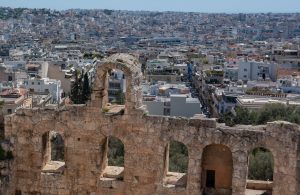
Along the way, you pass the Theatre of Dionysus, the Odeon of Herodes Atticus, and pathways leading toward Philopappou Hill. Look in the other direction and the scenery changes: neoclassical houses, Art Deco façades, shaded balconies, and some of the city’s most desirable residential buildings line the route.
It is often called the Grand Promenade, and the name feels appropriate. Musicians perform beneath the trees, residents walk their dogs, children ride scooters, and visitors pause every few meters to photograph the Acropolis rising above them.
The atmosphere changes throughout the day. Mornings are peaceful, especially before the tour groups arrive. By late afternoon, the marble glows in the softer light and the promenade becomes livelier. In the evening, when the monuments are illuminated and the heat begins to fade, the street feels almost theatrical.
Don’t rush it. This is not simply a route between landmarks; the walk itself is part of the experience.
Drakou and Georgaki Olympiou: The Neighborhood’s Living Room
If Dionysiou Areopagitou is Koukaki’s ceremonial avenue, Drakou and Georgaki Olympiou are its living room.
These pedestrian streets are where much of the neighborhood’s social life unfolds. Bitter orange trees, palms, and café awnings provide shade, while tables spill across the pavement from morning until late at night. Residents stop for coffee on their way to work, friends linger over lunch, and evening drinks have a habit of stretching well beyond the original plan.
There is something pleasantly old-fashioned about the atmosphere. The streets retain the intimacy of 1960s Athens, when neighborhood cafés served as informal extensions of people’s homes. At the same time, a younger generation has brought specialty coffee, small wine bars, inventive menus, and a more international energy.
The two moods sit comfortably together. An elderly resident reading the newspaper might occupy one table, while a group of designers works from laptops at the next. You feel the older and newer versions of Koukaki at once—and that contrast is part of what makes the neighborhood so appealing.
Drakou is especially convenient if you arrive by metro, as it begins near Syngrou-Fix station and leads naturally into the neighborhood. Georgaki Olympiou has a quieter, more residential feel, although its cafés and restaurants become increasingly animated as the evening goes on.
Friday at the Laiki
Every Friday, Tsami Karatasou Street changes character. Cars disappear, market stalls take their place, and the street becomes a traditional open-air farmers market, known in Greek as a laiki agora.
This is where local residents come to do their weekly shopping. Stalls are piled with tomatoes, citrus fruit, leafy greens, olives, potatoes, fresh herbs, eggs, honey, fish, and whatever else happens to be in season. Vendors call out their prices, shoppers inspect produce with practiced hands, and wheeled shopping trolleys squeeze through the crowd.
The market is lively, practical, and refreshingly unpolished. It smells of fruit, herbs, fish, and damp pavement. Conversations overlap. Bags are filled, prices are compared, and neighbors stop to exchange news.
For visitors, it offers a glimpse of Athens as a lived-in city rather than a collection of historic attractions. Come in the morning, bring cash and a reusable bag, and don’t be afraid to buy something. Even if you have no kitchen, a handful of cherries, a jar of honey, or a piece of seasonal fruit makes an excellent excuse to join in.
Where Koukaki’s Makers Work
Koukaki has developed into a small but lively center for contemporary Greek craft and design. Behind its storefronts and apartment façades, independent artists are producing ceramics, textiles, prints, jewelry, and functional objects inspired by both traditional techniques and modern Athens.
Ceramics are particularly well represented. Studios such as Val Goutsi, Trabala Studio, and UKU offer handmade pieces that feel personal rather than mass-produced. Shelves hold small-batch cups, plates, vases, and sculptural objects, many with visible traces of the hands that shaped them.
Some studios also run workshops, giving visitors the chance to work with clay rather than simply buy a finished piece. Sitting at a pottery wheel can be messy and unexpectedly difficult, but that is part of the pleasure. You leave with a better understanding of the craft—and possibly an imperfect object that means more than a conventional souvenir ever could.
The neighborhood’s creative scene extends into fashion as well. The independent label 24 Goat uses traditional linocut methods to create hand-printed clothing inspired by Athenian street life. Each design is physically pressed onto the fabric, giving the finished pieces a character that industrial printing cannot quite reproduce.
Shopping in these studios feels more like meeting the people behind the work than browsing a conventional retail district. Hours can be informal, so it is worth checking ahead if there is a particular workshop you want to visit.
Small Galleries and Unexpected Creative Spaces
Koukaki’s cultural life is not confined to its better-known studios. Small galleries, exhibition spaces, design shops, and creative workshops appear throughout the neighborhood, often in converted ground-floor apartments or former commercial spaces.
They can be easy to miss. A modest doorway may lead to a photography exhibition, a printmaking studio, or a room filled with experimental furniture and contemporary art. Posters in café windows and flyers pinned near entrances often provide the best clues about temporary exhibitions, performances, and workshops.
That sense of discovery suits Koukaki. Its creative scene does not announce itself with a grand cultural district or a row of imposing institutions. It reveals itself gradually, one doorway at a time.
Coffee as a Daily Ritual
Coffee in Koukaki is not something to drink quickly on the way somewhere else. It is a reason to stop.
Traditional cafés and newer specialty coffee shops coexist throughout the neighborhood. You can order a strong Greek coffee, an espresso, or a freddo—the iced coffee that gets many Athenians through the warmer months—and watch the street for an hour without feeling pressured to leave.
Morning is the quietest time to experience this side of Koukaki. Delivery scooters pass, shopkeepers raise their shutters, and residents settle into familiar tables. Later in the day, the same cafés become informal meeting places and, by evening, many shift almost seamlessly into bars.
This slow transition from coffee to drinks captures something essential about the neighborhood: spaces are flexible, schedules are loose, and social life rarely needs a formal invitation.
Eating in Koukaki
The neighborhood’s food scene follows the same pattern as the rest of its culture: local traditions mixed with newer ideas.
You’ll find small tavernas serving familiar Greek dishes, casual meze restaurants designed for sharing, bakeries scented with warm bread and sesame, and modern kitchens putting a lighter or more creative spin on regional ingredients. Many of the best places are intimate, with only a few tables inside and several more arranged along the pavement.
The pleasure lies less in chasing a single famous restaurant and more in following the neighborhood’s rhythm. Stop when somewhere feels welcoming. Order a few plates for the table, ask what is fresh, and leave room for the meal to unfold slowly.
After Dark: Wine, Tiki, and a Cocktail Safari
Koukaki’s nightlife is varied without becoming overwhelming. The neighborhood is animated after dark, but it generally feels more conversational than club-driven. Even on a busy evening, you can usually find somewhere to sit, talk, and watch the night develop around you.
Materia Prima and BoBo are two of the area’s notable wine bars. Both reward anyone curious about Greek wine, particularly bottles made from indigenous grape varieties that may be unfamiliar outside the country. Staff can usually guide you toward something based on what you already enjoy, whether that means crisp whites, earthy reds, or low-intervention and natural wines.
If wine is not what you’re after, the neighborhood becomes more playful.
Tiki Bar Athens offers a dose of retro Polynesian escapism, with colorful cocktails, vintage-inspired décor, and a mood far removed from the ancient monuments just beyond its doors. Meerkat Cocktail Safari takes a different route, drawing on African influences for its design and drinks.
The two bars create very different worlds, yet they sit within easy walking distance of one another. That variety makes an informal bar crawl tempting—but Koukaki is better suited to wandering than rushing. Start with wine, follow your curiosity, and see where the evening takes you.
A Neighborhood Made for Wandering
The best way to experience Koukaki is to move through it without treating every stop as an attraction to be checked off a list.
Begin with a morning walk beneath the Acropolis. Pause for coffee on Drakou Street. Browse a ceramics studio, pick up fruit at the Friday market, and follow a quiet side street simply because it looks inviting. Return in the evening for dinner and a glass of Greek wine.
Koukaki’s appeal lies in how naturally all these experiences fit together. Ancient monuments stand beside apartment blocks. Traditional markets operate near contemporary design studios. Old neighborhood cafés share streets with experimental cocktail bars.
Culture here is not sealed away or carefully staged. It is woven into daily life—and all you have to do is walk into it.