Getting to and Around Koukaki: A Comprehensive Travel Guide
Koukaki: An Athens Neighborhood Worth Basing Yourself In
Koukaki sits at the southeast foot of Philopappou Hill and runs down toward Syngrou Avenue. That position gives it a split personality. On one side, the quiet shadow of the Acropolis. On the other, six lanes of Athens traffic. It’s one of the most walkable corners of the city, and a smart place to stay if you plan to explore on foot.
Getting In From the Airport or the Port
From Athens International Airport (Eleftherios Venizelos):
The metro is your best bet. Take Line 3 (Blue) to Syntagma, switch to Line 2 (Red) toward Elliniko, and get off at Acropoli or Syngrou-Fix. Both stations sit a short walk from the middle of Koukaki. Expect 40 to 50 minutes door to door.
Prefer the bus? The X95 runs straight to Syntagma Square in about an hour. From there, grab the metro or a taxi.
Taxis wait outside baggage claim. A trip to the center runs roughly €40 to €50 on a fixed rate, depending on the hour.
From Piraeus Port:
Take Line 1 (Green) to Omonia or Syntagma, then change to Line 2 (Red) toward Syngrou-Fix or Acropoli. About 30 to 40 minutes.
The tram also links the port outskirts and seafront directly to the Syngrou-Fix hub.
Getting Around by Public Transit
Koukaki connects well to the rest of the city through the Athens transit system, OASA.
Line 2 (Red) is the neighborhood’s backbone. Acropoli Station covers the north end, dropping you at the Acropolis Museum and the pedestrian Dionysiou Areopagitou Street. Syngrou-Fix anchors the south, where the metro meets the tram and a tangle of bus lines. Trains run 5:00 AM to midnight, with service stretching to 2:00 AM on Friday and Saturday nights.
Plenty of buses and trolleybuses run the length of Syngrou Avenue, heading to the southern suburbs and the coast. The tram is the one to take if you want the Athens Riviera and its beaches.
For tickets, get an ATH.ENA card. Buy and reload it at kiosks and stations. A single ride costs €1.20 and stays valid for 90 minutes on any transport.
Walking the Neighborhood
Honestly, walking is the way to do Koukaki. It keeps a small-neighborhood feel that’s hard to find this close to the ancient core.
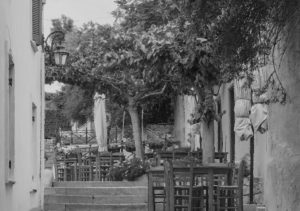
Daily life clusters on two pedestrian-only streets: Drakou and Georgaki Olympiou. Drakou is the busy one, running from the metro toward the archaeological zone. Olympiou is the calmer counterpart — shaded by bitter orange trees, a bit of jungle dropped into the city.
Steps away is the Dionysiou Areopagitou Promenade, a marble-paved walk that ties the ancient monuments to Philopappou Hill.
Distances are short. From central Koukaki, figure 5 to 10 minutes to the Acropolis Museum, 10 to 15 to the Acropolis south entrance or Plaka, and 20 to 25 to Syntagma Square.
Accessibility and Inclusion
Athens improved a lot on accessible design after the 2004 Olympics, and it shows here.
Both Acropoli and Syngrou-Fix stations are fully accessible, with elevators and escalators running from platform to street.
The Acropolis Museum and the National Museum of Contemporary Art (EMST) were built with access in mind. Both offer elevators, ramps, and free wheelchairs.
The hill itself has a wheelchair-accessible slope lift to the top of the Acropolis. If you need it, call ahead at +30 210 321 4172 to confirm it’s running that day.
Practical Tips
Taxis and apps. Yellow taxis are honest and easy to flag down, and most take cards. For booked rides or card payment, FREE NOW, Uber, and Taxiplon all work here.
Parking. Central Athens is rough on drivers. The exception nearby is the large 24-hour Metro parking facility at Syngrou-Fix.
Safety. Koukaki ranks among the safest parts of Athens, fine for a late-night walk. Still, watch your pockets in crowds — metro stations and busy pedestrian streets are where pickpockets work.
Sidewalks. Some of the older ones are narrow, uneven, and slick after rain.
Crosswalks. Crossing signals are short. Wait for a real gap in traffic, and keep an eye on turning cars. Drivers here will run a turning light.