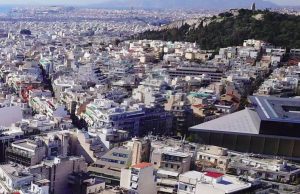
The Heart of Koukaki
Koukaki, Athens: The Neighborhood That Still Feels Like a Neighborhood
Koukaki turns up in travel magazines, restaurant guides and plenty of Instagram feeds. Spend a morning here, though, and what stands out is how ordinary much of it still is: apartment balconies, bakeries, pharmacies, a hardware store, older residents doing their shopping and friends stretching one coffee into an afternoon. On the same block you might also find a natural-wine bar, a ceramics studio or a café full of laptops.
That mix is typical of how Athens changes. New places rarely replace a street wholesale; they get squeezed in between what was already there. Koukaki’s position sped the process up. It lies between the Acropolis and Syngrou Avenue, beside Philopappou Hill, and the pedestrian “Grand Promenade” created by the Unification of Archaeological Sites project tied it into the historic center. By 2018 the New York Times was calling it Athens’ latest “it” neighborhood, with cafés and boutiques serving young Athenians and European visitors.
It is easier to understand if you treat it as several small neighborhoods sharing the same few streets.
Drakou Street: where everyone meets
Drakou starts near the Syngrou-Fix metro and tram stop and runs toward the historic center. Most of it is pedestrianized, so café and restaurant tables have gradually taken over the street. Mornings are fairly calm; by late afternoon it is busy, and cafés turn into bars as the evening goes on.
Visitors know about Drakou, but residents use it too, which keeps it from feeling like a street built for tourists. Come for a coffee and there is a good chance you will still be there when someone suggests ordering food.
Georgaki Olympiou: the greener alternative
A short walk away, Georgaki Olympiou is quieter and shadier. Trees and planted terraces shelter the café tables, and in July and August that shade matters. During the day people read, work on laptops or meet friends; in the evening the laptops give way to glasses of wine.
It gets called a digital-nomad street, but that undersells it. You will see remote workers, and also families, students and older residents who seem to have had the same table for years.
Veikou and Dimitrakopoulou: everyday Koukaki
If Drakou and Georgaki Olympiou are where Koukaki goes out, Veikou and Dimitrakopoulou are where it runs errands. They have bakeries, supermarkets, pharmacies, greengrocers and small independent shops, along with delivery scooters and the occasional double-parked car. Nobody would call them pretty, and that is the reason to walk them: this is the residential city that tourists rarely see.
Veikou is a good cross-section. Near the Acropolis the visitor economy is obvious; walk south and ordinary Athens takes over. Dimitrakopoulou has a growing food scene, with straightforward souvlaki and neighborhood cooking next to burgers and newer, more international places.
Falirou Street: where the change is easiest to see
On Falirou, workshops and practical businesses still exist, but cafés, restaurants, bars and design shops have moved in beside them, and at night the street feels very different from the residential blocks nearby. Places such as Materia Prima helped bring a more contemporary wine culture to the area, built around chosen bottles rather than the taverna carafe.
The nearby former FIX brewery shows the same pattern on a larger scale: once a symbol of postwar industrial Athens, it now houses the National Museum of Contemporary Art. Smaller versions are everywhere in Koukaki, from workshops turned into bars to garages turned into cafés.
Old habits worth joining
Some of the best things to do here are things residents have done for decades. Takis Bakery is one of the neighborhood’s best-known institutions; the New York Times dates it to 1962 and describes it as a long-standing fixture for koulouri, cheese pies and pastries, and the next generation of the family later opened a café across the alley. Go in the morning, when people are simply buying breakfast.
The weekly laiki agora is the other one. On market day, stalls fill an ordinary street with whatever is in season, plus olives, greens and herbs. It is a working market where Athenians buy their week’s produce, so bring a shopping bag as well as a camera.
Koukaki Square
Athens is full of places where you are told to look at something important. Koukaki Square asks much less. Sit with a coffee and watch the square: children playing, someone walking a dog, a neighbor coming back with groceries. In a dense city of apartment blocks, small spaces like this are where private life spills outdoors.
The European Commission’s study of the historic center makes a similar point on a larger scale: the pedestrian routes around the archaeological zone became popular places for Athenians to walk and meet, not just tourist routes.
A neighborhood changed by visitors
Tourism is now part of Koukaki’s economy. Short-term rentals have changed apartment buildings that used to be almost entirely residential, and cafés, luggage-storage businesses and other visitor services have multiplied. The New York Times noted the large number of Airbnb apartments, coin laundries and luggage-storage services as early as 2018.
Visitors bring money to independent restaurants, bakeries and shops. An economy built around short stays can also push up rents and change the rhythm of residential streets. Koukaki is not unique in this, but tourism arrived here so quickly that the effects are easy to see. Our page on the neighborhood in transition looks at this in more detail.
About “Little Paris”
Stories about Koukaki’s bohemian past, including the nickname “Little Paris” and tales of writers gathering in local tavernas, turn up in many descriptions of the neighborhood. We haven’t found a reliable source for them, so treat them as local lore rather than history. The documented story is interesting enough: Koukaki grew as part of the fast, dense expansion of 20th-century Athens, right beside some of the most important ancient landscapes in Greece. You can read more in History and Roots.
How to spend a day here
Skip the checklist. Walk Drakou when it is busy, then take the quieter route along Georgaki Olympiou. Buy something at the laiki and get bread from Takis. Wander Veikou without looking for anything in particular, then head up Philopappou Hill, whose wooded paths give some of the best views back toward the Acropolis.